As the population of older adults continues to grow across Canada and the United States, the need for accessible, dependable, and personalized senior services has become more important than ever. Millions of seniors want to remain independent, maintain their routines, stay connected with their communities, and enjoy a comfortable quality of life. At the same time, families are searching for practical ways to support aging parents and loved ones without having to navigate dozens of disconnected websites, service providers, and product suppliers. From home care and transportation to household assistance, mobility equipment, wellness programs, and everyday products, the senior services industry offers an enormous range of solutions. Yet finding the right provider, understanding available options, and connecting with someone who serves a particular city can still be unnecessarily complicated. ElderNext was created to help address this challenge by bringing senior-focused services, products, and local partners together within one convenient and accessible network. Built around the belief that older adults deserve more choice, greater convenience, and meaningful connections with businesses in their communities, ElderNext represents a new approach to how seniors and families discover the support they need.
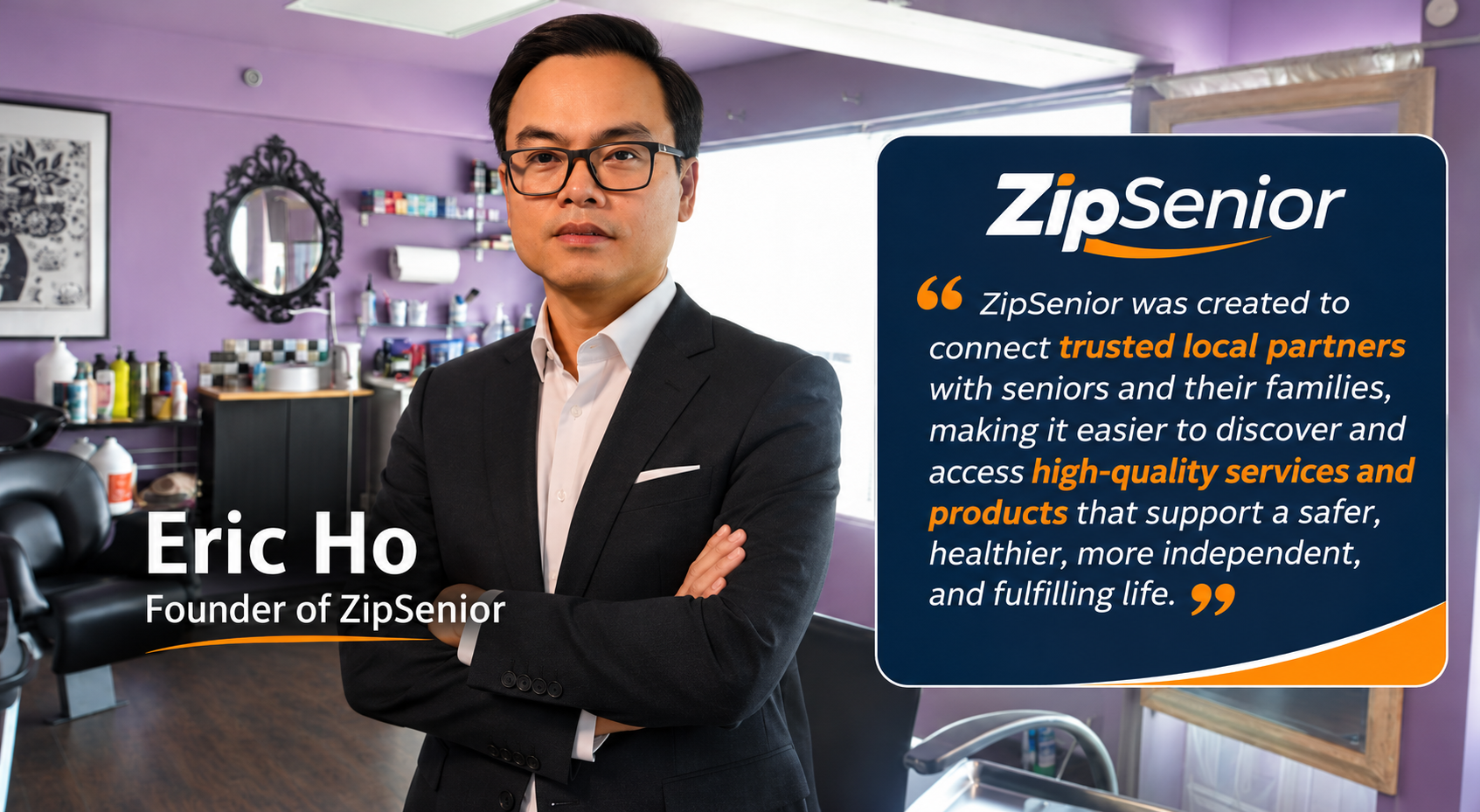
Founded by Eric Ho, a Canadian entrepreneur and co-founder of TapLook, RideSenior, BabaTap, and TapGoGo, ElderNext brings together experience gained from developing specialized service platforms designed around the needs of older adults. Through these businesses, Eric Ho has been involved in building solutions that address different aspects of senior living, including mobile personal care, transportation, everyday home support, and mobility equipment rental. Each business was developed to respond to a particular need, but together they revealed a much broader opportunity. Seniors rarely need just one category of assistance throughout their lives. Someone who initially books a mobile haircut may eventually need transportation to medical appointments, occasional housekeeping, help with groceries, or a mobility product that makes daily activities easier. A family arranging transportation for an aging parent may also be searching for home safety improvements, companionship, meal delivery, or professional advice about retirement living. These needs are interconnected, but the businesses providing them often operate independently. ElderNext was conceived as a way to bridge that gap, creating a broader network where seniors can explore multiple types of support and where local businesses can connect with customers who are actively looking for their services and products.
The inspiration behind ElderNext comes from a simple but powerful observation: the senior market is not defined by one service, one product, or one stage of aging. It encompasses an entire ecosystem of everyday needs, personal preferences, health-related considerations, lifestyle choices, and family responsibilities. A senior living independently in Edmonton may have very different priorities from someone residing in a retirement community in Toronto or an older adult recovering from surgery in Miami. Some people need regular assistance, while others only require occasional services. Some are looking for professional home care, while others want a reliable handyman, a comfortable lift chair, an accessible transportation option, or a local social activity. ElderNext recognizes this diversity and aims to make the process of discovering appropriate options more straightforward. Rather than limiting its identity to one segment of the industry, the platform is designed to support a wide range of senior services and products, allowing customers to explore solutions that fit their individual circumstances, budgets, locations, and preferences.
At the center of ElderNext’s mission is the idea of connecting customers with relevant local partners. Local availability matters enormously in senior services because many forms of assistance depend on where a person lives. A highly qualified service provider located hundreds of kilometres away may not be useful to a customer who needs help at home next week. Similarly, a mobility equipment supplier, transportation provider, home modification contractor, or personal care professional must be accessible to the communities they serve. ElderNext is being developed around a location-focused model that helps seniors and families discover businesses and service providers in their own cities and surrounding areas. By organizing opportunities geographically, the platform aims to make local connections more practical and meaningful. This approach also creates opportunities for independent professionals, small businesses, and established organizations to become more visible within the communities where they already operate. ElderNext’s long-term vision is to make local discovery easier while preserving the personal relationships and community knowledge that are so valuable when serving older adults.
The foundation for this vision was shaped by the development of TapLook, a mobile beauty service platform focused on bringing personal grooming services to seniors. For many older adults, something as routine as visiting a salon can become difficult because of transportation limitations, reduced mobility, health concerns, or personal comfort. Mobile haircut and nail care services can make these everyday experiences more accessible by bringing professional care closer to where customers live. TapLook demonstrated the value of adapting traditional services to the needs of an aging population, while also creating opportunities for independent beauty professionals to reach a specialized customer base. More importantly, it highlighted how convenience, dignity, and personalized attention can transform a simple appointment into a meaningful experience. These principles helped shape the broader philosophy behind ElderNext, where everyday services are recognized as important components of independence and quality of life rather than merely optional conveniences.
RideSenior contributed another important perspective by focusing on transportation for older adults. Transportation is closely connected to independence because the ability to attend medical appointments, visit family members, participate in community activities, and complete daily errands affects nearly every aspect of life. Many seniors do not require emergency medical transportation, but they benefit from services that recognize their specific needs for patience, clear communication, assistance, and dependable scheduling. RideSenior was developed to address this specialized market, including transportation for appointments and personalized outings. Through the experience of connecting riders with transportation partners, the importance of local coverage, service coordination, and transparent customer communication became increasingly apparent. These lessons reinforced the idea that a broader senior marketplace should not simply display businesses without context. It should help customers understand what types of services are available, how those services relate to their needs, and how to take the next step toward requesting assistance.
BabaTap added further insight into the everyday challenges seniors face at home. Many older adults wish to continue living in familiar surroundings, but maintaining a household can become more demanding over time. Light housekeeping, laundry, home organization, meal preparation, and companionship can all contribute to a more manageable daily routine. BabaTap’s focus on senior housekeeping and everyday home help illustrates how non-medical support can complement other services without replacing professional healthcare. This distinction is important because families often need a combination of solutions rather than a single comprehensive provider. Someone may receive medical support from a licensed healthcare organization while relying on a separate service for household tasks and another provider for transportation. ElderNext is designed to reflect this reality by presenting a wider range of service categories and helping families explore complementary forms of assistance according to their needs.
TapGoGo, developed around mobility equipment rental, provided another essential piece of the larger picture. Mobility products can make a significant difference in daily comfort, accessibility, and participation, but purchasing equipment is not always the right solution for every customer. Some seniors need equipment temporarily following a medical procedure, during rehabilitation, or while travelling. Others may want to compare rental and purchase options before making a long-term decision. The mobility market also extends far beyond wheelchairs and scooters to include walkers, rollators, lift chairs, hospital beds, bathroom safety products, ramps, and adaptive equipment. Through this experience, it became clear that senior-focused products deserve a prominent place alongside services. ElderNext therefore brings both categories into its broader vision, recognizing that a helpful marketplace must address not only what people need others to do for them, but also the products that allow them to do more for themselves.
Together, these experiences influenced Eric Ho’s decision to establish ElderNext as a more comprehensive platform rather than simply expanding one existing business into unrelated categories. Each specialized brand has its own identity, operating model, and customer expectations. ElderNext is intended to serve a different purpose: connecting a much broader ecosystem of providers and customers through a recognizable senior-focused marketplace. The goal is not to suggest that every service should be delivered by the same company or that one provider can meet every possible need. Instead, ElderNext embraces the diversity of the market and seeks to create a central destination where different businesses can be discovered according to their specialties. A local home care agency, independent hairstylist, transportation business, medical equipment supplier, retirement residence, and legal professional may all serve older adults, but each brings distinct expertise. ElderNext’s role is to help make those different offerings easier to find and compare.
The platform’s growing directory is organized around more than 130 categories of senior services and products, reflecting the broad range of needs associated with aging and independent living. These categories include home care, personal support, senior transportation, companionship, housekeeping, home maintenance, meal delivery, mobility equipment, medical alert systems, home safety modifications, healthcare-related services, wellness programs, financial planning, legal assistance, and community activities. The directory also recognizes that seniors have interests extending beyond basic care and safety. Art classes, music programs, fitness activities, social clubs, sightseeing opportunities, pet services, and technology assistance can all contribute to an active and fulfilling lifestyle. By including both essential support and lifestyle-oriented offerings, ElderNext aims to present a more complete picture of what senior living can mean. Aging should not be viewed exclusively through the lens of limitations; it should also be understood in terms of opportunity, connection, enjoyment, and personal choice.
For customers, one of ElderNext’s most important benefits is the potential to reduce the time and effort required to find relevant services. Searching for senior support can be frustrating, especially when families are dealing with an urgent change in circumstances. A hospital discharge, a decline in mobility, a move to a new residence, or the sudden need for additional household assistance may require several decisions within a short period. Families may spend hours searching for providers, checking service areas, comparing options, and trying to determine whether a business is suitable for an older adult. ElderNext aims to simplify the discovery stage by bringing multiple categories into one organized environment. Visitors can begin with the type of assistance they need, explore relevant options, and identify businesses serving their location. The platform’s value lies in making the search process more focused and understandable, while allowing customers to make informed decisions about the providers and products that best meet their circumstances.
For seniors who prefer to make their own decisions, ElderNext is designed around the principle of independence. Older adults should not be treated as a uniform group with identical needs, nor should their choices automatically be made by family members or caregivers. Many seniors remain active, financially independent, technologically engaged, and deeply involved in their communities. They may be looking for convenience rather than care, or for products that support an already active lifestyle. Others may require substantial assistance and benefit from family participation in the selection process. ElderNext seeks to accommodate this wide spectrum by offering accessible categories and practical information without assuming that every visitor has the same requirements. Whether someone is looking for a yoga class, a wheelchair rental, an accessible ride, or help with household tasks, the underlying objective remains the same: to support personal choice and help customers find options that fit their lives.
Families and caregivers represent another important audience. Supporting an aging parent can involve balancing employment, children, personal responsibilities, and concerns about a loved one’s well-being. Geographic distance can make these responsibilities even more complicated. An adult child living in Calgary may be arranging services for a parent in Edmonton, while another family member in the United States may be helping an older relative explore transportation or home assistance. A centralized senior-focused platform can make it easier to begin researching available options without relying entirely on personal referrals or disconnected search results. ElderNext aims to become a useful resource for these families by presenting relevant categories, encouraging clear communication, and making local discovery more convenient. The objective is not to replace the judgment of families or qualified professionals, but to give them a more organized starting point when important decisions need to be made.
Trust is fundamental to this vision. Seniors and their families are often making decisions that affect personal safety, financial well-being, comfort, and access to essential support. A professional-looking website alone cannot establish whether a particular provider is appropriate, and customers deserve accurate information about what a business offers. ElderNext therefore places importance on building a network that values professionalism, transparency, responsible service descriptions, and respectful treatment of older adults. As the platform develops its partner participation and review processes, the intention is to encourage businesses to provide clear information about their services, coverage areas, qualifications where applicable, and customer expectations. Different industries may require different forms of licensing, insurance, certification, or regulatory compliance, and these responsibilities remain important when customers evaluate providers. ElderNext’s goal is to support informed connections rather than imply that every listed business offers identical standards, credentials, or guarantees.
For service providers and product suppliers, ElderNext offers a different but equally compelling opportunity. Many businesses serving older adults have valuable expertise but struggle to reach the right customers consistently. A local professional may provide excellent service yet have limited resources for marketing, search engine optimization, website development, or customer acquisition. A small mobility equipment retailer may carry useful products but compete for online visibility against much larger companies. A home maintenance business may serve seniors regularly without having a dedicated strategy for reaching that audience. ElderNext is being built to help address these challenges by creating a marketplace focused specifically on older adults and their families. Rather than requiring every partner to establish a large independent marketing presence, the platform aims to give participating businesses another channel through which potential customers can discover their offerings. This creates an opportunity for providers to become part of a broader network while maintaining their own specialties, service capabilities, and professional identities.
The importance of local partners cannot be overstated. ElderNext’s long-term success depends on the businesses, professionals, and organizations that understand the communities they serve. A senior transportation provider in Ottawa understands local travel conditions and common destinations. A home modification contractor in Vancouver may be familiar with regional housing styles and accessibility challenges. A mobile personal care professional in Halifax understands the practical considerations of visiting customers in their homes or retirement communities. These local insights can make services more relevant and responsive. ElderNext’s vision is to connect such knowledge with a broader digital discovery platform, combining the reach of an online marketplace with the value of community-based service delivery. By making it easier for customers to find nearby providers, the platform aims to support both customer convenience and opportunities for local businesses.
ElderNext also recognizes that different types of partners require different approaches. A professional delivering services in a customer’s home operates differently from an online retailer shipping products. A retirement community has different customer relationships from a wheelchair rental company, and a licensed healthcare professional works within requirements that differ from those of a household maintenance provider. The platform’s multi-category structure is intended to accommodate this diversity rather than force every business into one model. Participating partners can be associated with relevant categories and geographic markets, helping customers understand the nature of their offerings. As the network evolves, ElderNext aims to improve the ways businesses present their information, communicate their capabilities, and connect with potential customers. The broader objective is to build an environment in which both specialized independent professionals and established organizations can participate meaningfully.
Another important part of ElderNext’s strategy is its focus on digital visibility and local search. People looking for senior services often begin with specific searches such as home care services in Toronto, wheelchair rental in Calgary, senior transportation in Edmonton, or hearing aid providers in Montreal. These searches indicate that customers are looking for a particular solution in a particular location. ElderNext is developing a structure that connects service and product categories with geographic discovery, helping visitors navigate from broad interests to more relevant local information. For partners, this creates the possibility of reaching customers who are already researching the services or products they offer. However, meaningful visibility requires more than creating large numbers of pages. Useful content, accurate location information, relevant listings, clear navigation, and ongoing maintenance are essential. ElderNext’s approach is intended to prioritize genuine customer usefulness while developing a scalable digital foundation.
The relationship between services and products is another area where ElderNext seeks to create value. In everyday life, these categories frequently overlap. A customer considering a wheelchair may also need accessible transportation, home entrance modifications, or assistance with equipment setup. Someone exploring home care might also be interested in bathroom safety products, medical alert systems, meal delivery, or household organization. A senior preparing to return home after a hospital stay may benefit from several different providers working independently to address separate needs. ElderNext’s broad directory makes it possible for customers to discover related categories without starting an entirely new search each time. This does not mean that every customer requires multiple services or that one product automatically leads to another purchase. Rather, the platform aims to make relevant options visible so that individuals and families can choose the combination of support that makes sense for them.
Beyond convenience, ElderNext is guided by a commitment to dignity and respectful aging. The language used to describe senior services can sometimes focus excessively on dependence, illness, or vulnerability. While many older adults face genuine challenges, those challenges do not define their identities or diminish their right to make choices. A person seeking assistance with cleaning may still manage every other aspect of life independently. Someone who uses a mobility scooter may remain highly active in community events and social activities. A senior who receives transportation support may simply prefer not to drive. ElderNext aims to reflect this diversity by presenting products and services as practical resources that support everyday living. The platform’s message is grounded in the belief that asking for assistance, choosing convenience, or using adaptive equipment should be understood as normal decisions that can contribute to a more comfortable and fulfilling life.
The company also sees meaningful potential in helping families discover services before a situation becomes urgent. Many people begin researching senior support only after an unexpected event, but proactive planning can make future decisions easier. Exploring home safety modifications, transportation alternatives, financial planning, mobility equipment, or local wellness programs in advance may help families better understand available choices. ElderNext’s directory is intended to support both immediate needs and longer-term research. A visitor may be ready to request a service today, or they may simply want to learn about options that could become relevant in the coming months. Both types of visitors deserve useful information and a straightforward experience. By supporting discovery at different stages, ElderNext hopes to build lasting relationships with customers rather than focusing solely on individual transactions.
For partners, building those relationships can be particularly valuable. Serving seniors often requires consistency, patience, and an understanding of changing needs. A positive first experience can lead to future inquiries, recommendations, and longer-term customer relationships, although outcomes naturally depend on the quality and relevance of each provider’s offering. ElderNext’s network model is intended to help businesses connect with an audience that may value continuity and specialized attention. It also creates an opportunity for partners to participate in a recognizable senior-focused ecosystem without losing their individual identities. A provider does not need to offer every service listed on ElderNext to contribute meaningfully. In fact, the platform’s strength depends on having businesses with different areas of expertise. A focused local provider can be just as relevant to a customer as a larger organization when its capabilities match the customer’s needs.
ElderNext’s geographic ambition extends across Canada and the United States, two countries with substantial and diverse populations of older adults. Although communities differ in their healthcare systems, service regulations, consumer expectations, and local market conditions, many everyday needs are shared. Seniors in both countries seek reliable transportation, comfortable homes, accessible products, personal services, and opportunities for social participation. Families in both markets want clearer ways to find support and evaluate available choices. ElderNext’s North American vision is to develop a recognizable destination that can accommodate regional differences while maintaining a consistent commitment to usability, transparency, and senior-focused discovery. This is a long-term undertaking, and the availability of partners and services will naturally vary by city as the network develops. Expanding responsibly means recognizing those differences rather than assuming that every category is immediately available in every location.
Technology will play an important role in supporting that growth, but ElderNext does not view technology as a substitute for human connection. A digital platform can organize information, make categories searchable, improve navigation, and help customers submit inquiries more efficiently. It cannot replace the empathy of a caregiver, the patience of a transportation professional, the practical judgment of a home modification specialist, or the personal attention of a local business owner. ElderNext’s purpose is to bring these two strengths together. Technology should reduce unnecessary obstacles between people who need support and the professionals who can provide it. When designed thoughtfully, an online marketplace can help local businesses become easier to discover while allowing seniors and families to spend less time searching and more time making decisions that matter.
Eric Ho’s experience across TapLook, RideSenior, BabaTap, and TapGoGo has reinforced the importance of building around real customer needs rather than treating the senior market as a single commercial category. Each venture has contributed lessons about specialized service delivery, local partner networks, customer expectations, and the practical challenges of supporting older adults. ElderNext represents an effort to bring those lessons into a larger vision, one that recognizes the connections between personal care, mobility, transportation, household assistance, healthcare-related services, and everyday lifestyle choices. As founder, Eric Ho sees an opportunity to create a platform where businesses of different sizes can participate in a shared ecosystem and where customers can explore a broader range of solutions through one recognizable brand. The ambition is not simply to build another directory, but to develop a useful connection point between the senior community and the businesses that serve it.
That ambition also carries responsibilities. A growing marketplace must continually improve the quality and clarity of its information, respond to customer feedback, and recognize the limitations of its own role. Providers are responsible for accurately describing their offerings and meeting applicable professional and legal requirements. Customers should have access to information that helps them ask appropriate questions before booking services or purchasing products. Where health, mobility, financial, or legal decisions are involved, professional advice and individual circumstances remain essential. ElderNext aims to encourage responsible participation while developing processes that make its network increasingly useful and dependable. Trust is not created through marketing statements alone; it must be earned through consistent practices, clear expectations, and a willingness to improve as the platform grows.
The future of ElderNext will be shaped not only by technology and business development, but also by the participation of its partners and the experiences of its customers. Every new category represents a potential connection between a need and a solution. Every participating local business brings its own knowledge, skills, and perspective. Every customer inquiry provides an opportunity to better understand how older adults and families search for support. Over time, these interactions can help the platform refine its organization, improve its content, identify underserved locations, and develop more effective ways of connecting people. ElderNext’s goal is to grow as a network that remains relevant to everyday life, whether someone needs a simple product, a one-time service, ongoing assistance, or information about future options.
For seniors and families, ElderNext extends an invitation to discover possibilities. Whether the immediate priority is finding help around the house, arranging transportation, exploring mobility equipment, identifying wellness activities, or researching a specialized professional service, the platform is intended to provide a convenient place to begin. Customers are encouraged to explore available categories, consider their individual requirements, and connect with providers whose services and coverage areas align with their needs. For businesses and independent professionals, ElderNext extends an equally important invitation to become part of a growing senior-focused network. Providers who value respectful service, clear communication, professional responsibility, and meaningful community relationships can contribute to an ecosystem designed around the needs of older adults.
ElderNext is ultimately built on a belief that the future of senior living should offer more connection, not more complexity. As people age, their needs may change, but their desire for independence, dignity, comfort, and participation remains deeply important. Families deserve better ways to discover relevant support, and local businesses deserve opportunities to connect with the people who can benefit from their expertise. By bringing senior services, products, and community-based partners together, ElderNext aims to make those connections easier to establish and more valuable over time. Founded by Eric Ho and informed by the experience behind TapLook, RideSenior, BabaTap, and TapGoGo, the platform represents an ambitious next step toward a more connected senior marketplace across North America. Its purpose is clear: to help seniors and families discover suitable services and products, to help local partners reach the communities they serve, and to contribute to a future in which finding the right support becomes simpler, more accessible, and more personal. ElderNext is more than a collection of categories or business listings. It is a growing vision for bringing people, practical solutions, and local expertise together, helping older adults live with greater choice and confidence while creating meaningful opportunities for the businesses dedicated to serving them.
ElderNext — Everything Seniors Need in One Trusted Network.